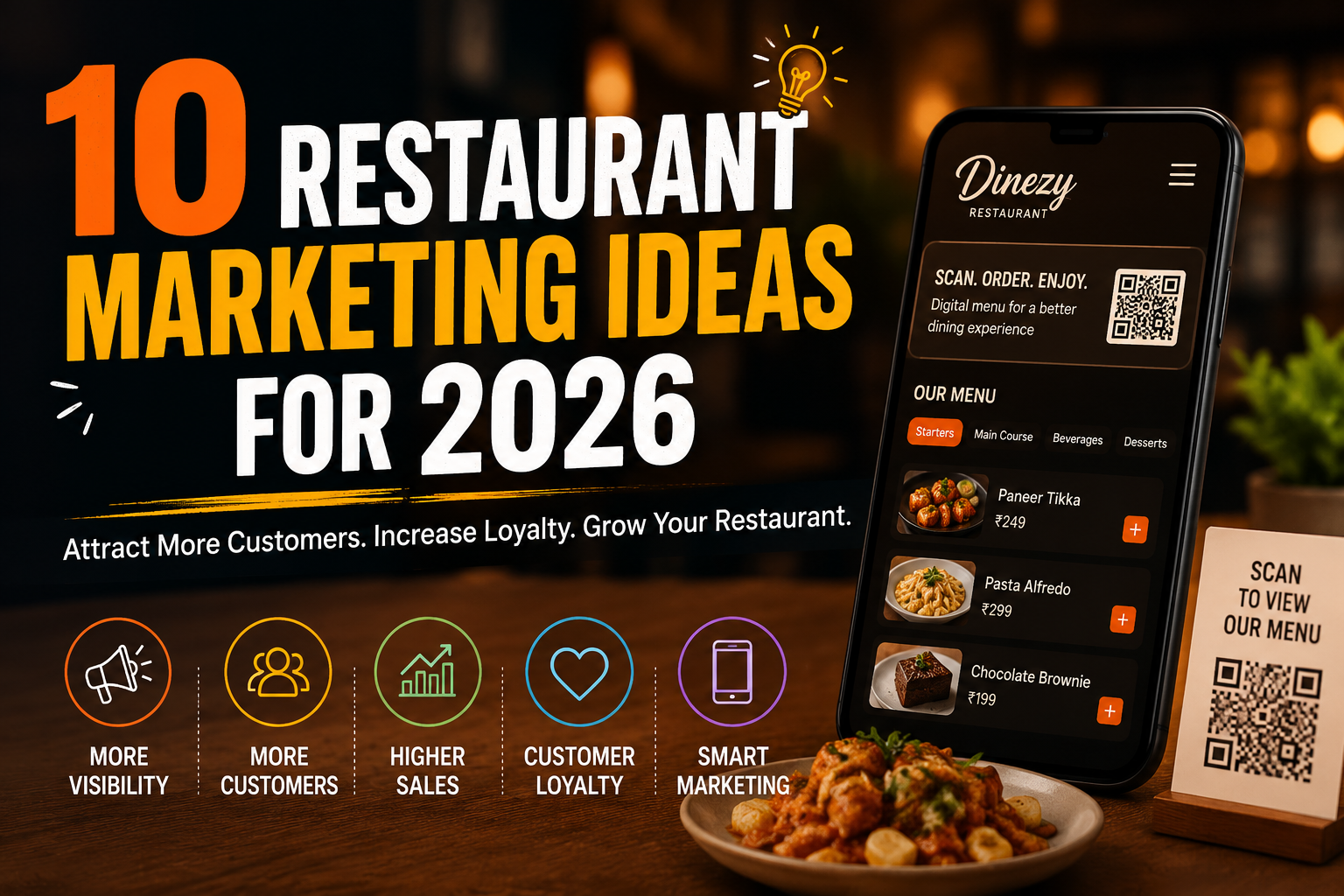
10 Restaurant Marketing Ideas for 2026
Meta Title: 10 Restaurant Marketing Ideas for 2026 | Increase Customers & Sales
Meta Description: Discover 10 proven restaurant marketing ideas for 2026 to attract more customers, increase repeat visits, and grow your restaurant business with digital strategies.
10 Restaurant Marketing Ideas for 2026 to Grow Your Restaurant Business
Running a restaurant in 2026 is more competitive than ever. Great food alone isn't enough to keep tables full. Customers discover restaurants online, read reviews, browse menus before visiting, and expect a seamless dining experience.
The good news? You don't need a massive marketing budget to attract more customers. By using the right digital tools and customer engagement strategies, even small restaurants and cafés can compete with larger brands.
Here are 10 practical restaurant marketing ideas that can help increase footfall, improve customer loyalty, and boost revenue.
1. Replace Printed Menus with QR Code Digital Menus
Today's customers prefer convenience. A QR code menu allows guests to scan a code with their phone and instantly browse your menu without downloading an app.
Benefits include:
Update menu prices instantly
Add new dishes anytime
Reduce printing costs
Display attractive food images
Highlight best-selling dishes
Promote seasonal offers
A digital menu also provides valuable insights into which dishes customers view the most, helping you make smarter business decisions.
2. Build a Strong Google Business Profile
Many customers search for restaurants using phrases like:
"Best restaurants near me"
"Cafe near me"
"Family restaurants in Pune"
Keeping your Google Business Profile updated improves your chances of appearing in local search results.
Make sure your profile includes:
Opening hours
Phone number
Address
High-quality food photos
Updated menu
Customer reviews
Responding to reviews—both positive and negative—also builds trust.
3. Encourage Customer Reviews
Online reviews strongly influence dining decisions.
Train your staff to politely request reviews after a positive dining experience.
You can also place a QR code on the table that directs customers to your Google review page.
More authentic reviews improve credibility and increase your local search rankings.
4. Use Instagram Reels and Short Videos
Short-form videos continue to dominate social media.
Share content like:
Food preparation
Behind-the-scenes kitchen moments
Chef specials
Customer reactions
New menu launches
Time-lapse cooking videos
Consistency matters more than perfection. Posting a few engaging videos each week can significantly improve your restaurant's visibility.
5. Launch a Customer Loyalty Program
Acquiring a new customer is often more expensive than retaining an existing one.
Reward repeat visits by offering:
Points for every visit
Free desserts
Birthday rewards
Discount coupons
Exclusive member offers
Customers who feel rewarded are more likely to return and recommend your restaurant to friends.
6. Collect Customer Data Responsibly
With customer permission, collect information such as:
Phone number
Birthday
Favorite dishes
Visit frequency
This allows you to send personalized offers instead of generic promotions.
Examples include:
Birthday discounts
Festival offers
Weekend specials
Anniversary rewards
Personalized marketing usually performs much better than mass messaging.
7. Partner with Local Food Creators
Local food bloggers and creators often have highly engaged audiences.
Invite them to experience your restaurant and share honest reviews.
Even micro-influencers with a few thousand followers can generate meaningful local awareness at a lower cost than traditional advertising.
8. Use Smart Upselling
Increasing the average order value is just as important as attracting new customers.
Suggest complementary items such as:
Extra cheese
Desserts
Mocktails
Combo meals
Add-ons
Customers are more likely to purchase when recommendations appear naturally during the ordering process.
9. Run Limited-Time Offers
Scarcity encourages action.
Examples include:
Weekend combo deals
Lunch specials
Happy hours
Festival menus
Seasonal dishes
Limited-time promotions create excitement and encourage customers to visit sooner rather than later.
10. Measure Everything
Successful restaurants make decisions based on data.
Track metrics such as:
Daily customers
Popular dishes
Menu views
Repeat customers
Average order value
Customer feedback
Understanding these numbers helps identify what's working and where improvements are needed.
Bonus Tip: Invest in Restaurant Technology
Technology isn't replacing hospitality—it's improving it.
Modern restaurant platforms can help you:
Create digital menus
Update prices instantly
Display food images
Track menu performance
Promote special offers
Improve customer experience
When routine tasks become easier, your staff can focus on delivering excellent service.
Final Thoughts
Restaurant marketing in 2026 is about creating memorable customer experiences both online and offline.
Instead of relying on a single marketing channel, combine several strategies:
Build your online presence
Engage customers on social media
Reward loyal guests
Use digital tools to improve operations
Make decisions using real data
Small improvements made consistently can lead to significant growth over time.
If you're looking to modernize your restaurant with a QR code digital menu, real-time menu updates, customer engagement features, and analytics, platforms like Dinezy can help restaurants deliver a better dining experience while simplifying menu management.
FAQs
1. What is the best marketing strategy for restaurants in 2026?
A combination of local SEO, QR code digital menus, customer reviews, loyalty programs, and social media marketing delivers the best long-term results.
2. How can a restaurant attract more customers without spending a lot?
Focus on Google Business Profile optimization, encourage customer reviews, post regularly on Instagram, and implement a loyalty program. These methods are cost-effective and sustainable.
3. Are QR code menus still relevant in 2026?
Yes. QR code menus remain popular because they're easy to update, reduce printing costs, and provide a convenient experience for customers.
4. How often should restaurants post on social media?
Aim for 3–5 posts or Reels per week. Consistency is more important than posting every day.
5. Why are customer reviews important?
Positive reviews improve trust, influence new customers, and help restaurants rank higher in local search results, leading to increased visibility and foot traffic.